Table of Contents
Diesel prices keep climbing. A machine burns fuel every hour. Fuel is a major operating cost, yet many owners ignore mini skid steer fuel consumption. They focus purely on attachments and productivity. However, high fuel consumption eats heavily into your profit margins.
A standard unit burns 1.5 to 2.5 gallons per hour. At $4 per gallon, that is $6 to $10 per hour. Over 1,000 hours, fuel costs $6,000 to $10,000. Cutting mini skid steer fuel consumption by 30 percent saves $1,800 to $3,000 per year.
This guide covers practical ways to cut mini skid steer fuel consumption. Each method directly saves money and extends the overall life of your equipment.
Fuel is the second largest operating cost. Only depreciation costs more. High diesel consumption reduces profit margins because every gallon burned is money spent. Reducing mini skid steer fuel consumption increases overall profitability immediately.
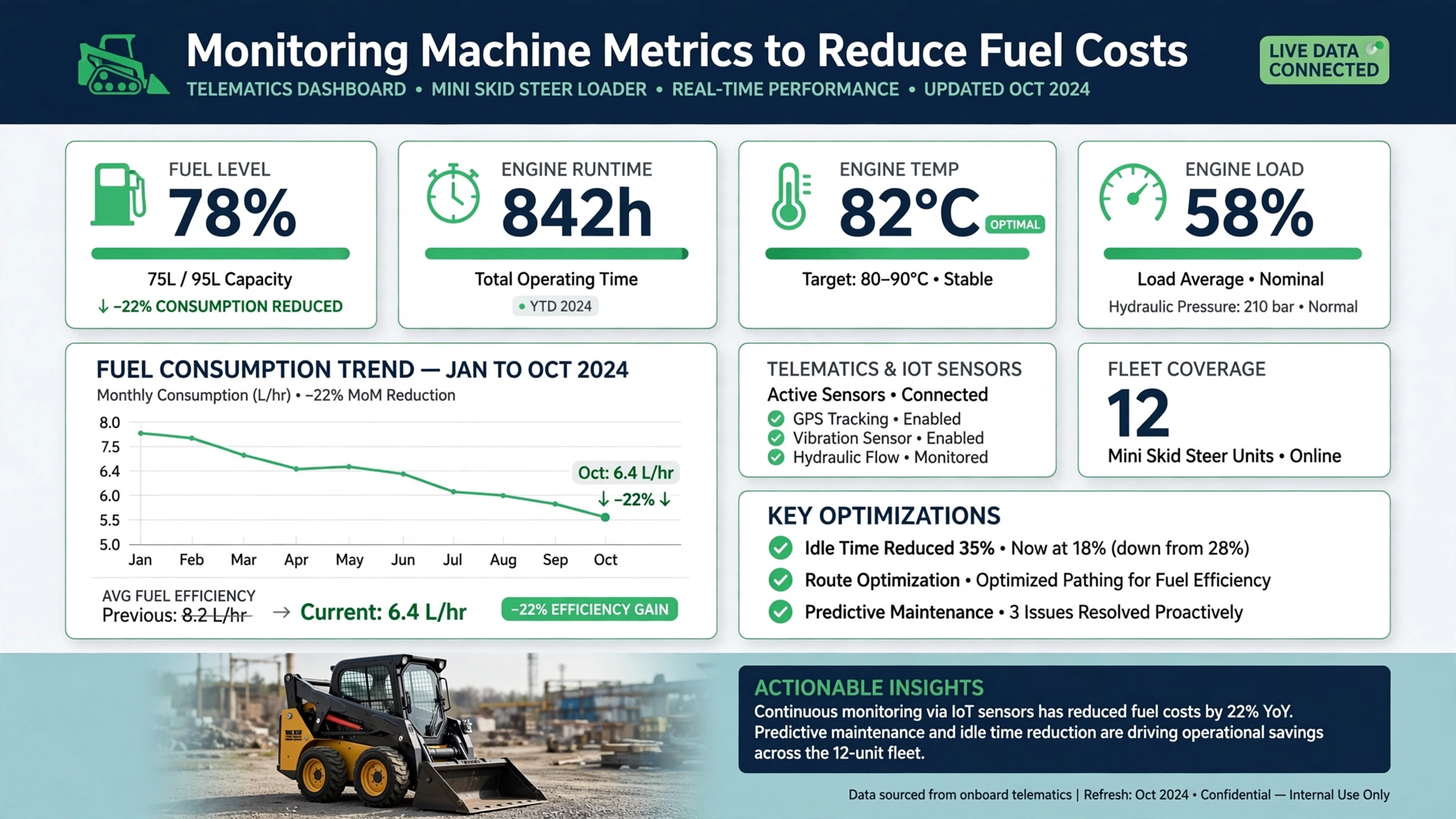
High mini skid steer fuel consumption also indicates potential engine health issues. Higher consumption means hidden problems, while lower consumption means efficient operation. Monitoring fuel usage reveals issues early so you can fix them before a major failure.
Tracking mini skid steer fuel consumption is the first essential step to saving money in your daily operations.
Running the engine at full throttle significantly increases mini skid steer fuel consumption. Most operators run at maximum RPM, thinking they need full power all the time. They do not.
Different tasks require different RPM. Grading uses less power, while digging uses more. Run the engine at the minimum RPM needed for the job. For light grading, running at 2,200 RPM instead of maximum RPM directly optimizes your mini skid steer fuel consumption.
Check the operator manual for recommended RPM ranges. The engine runs cooler at lower RPM, and cooler engines simply last longer.
Idling burns fuel without doing any actual work, severely worsening your fuel efficiency. Operators often leave the machine running during breaks, while talking to clients, or while waiting for materials to arrive.
A diesel engine burns 0.5 to 1 gallon per hour at idle. Over an 8-hour day, idling for 1 hour wastes money rapidly. Turn off the engine when not working. Avoiding unnecessary idle time is one of the easiest ways to improve mini skid steer fuel consumption across your entire fleet.
Underinflated tracks or tires increase rolling resistance. Higher resistance means higher mini skid steer fuel consumption because the engine has to work much harder to move the machine forward.
Check track tension regularly. Loose tracks create more drag, which negatively impacts mini skid steer fuel consumption. Proper tension extends track life and reduces drag. Following the manufacturer’s recommended pressure saves fuel and protects expensive undercarriage parts.
A dirty machine spikes your mini skid steer fuel consumption. Mud and debris add unnecessary weight, forcing the engine to work harder, and a dirty radiator reduces cooling efficiency. Hotter engines burn more fuel and wear faster, leading to terrible fuel economy.
Clean the machine after each job. Remove mud from the undercarriage and clean the radiator fins. A clean machine weighs less, runs cooler, and keeps your mini skid steer fuel consumption strictly within budget.
Unnecessary weight always increases mini skid steer fuel consumption. Extra weight means the engine works harder than it needs to. Remove items not needed for the job. Every pound counts toward better mini skid steer fuel consumption.
Remove heavy attachments when not in use. Hauling an unused 300-pound attachment around a site all day burns extra fuel. Switch attachments only when needed at the shop, and carry only what is absolutely necessary.
Inefficient work patterns increase mini skid steer fuel consumption. Traveling back and forth constantly, making extra trips, and taking poor positions waste fuel unnecessarily.
Plan the work area before starting. Identify material sources and dumping areas to minimize travel distance. Load from the closest point, and use the machine’s turning radius efficiently. Each unnecessary turn burns fuel. By minimizing travel, you immediately lower your mini skid steer fuel consumption.
The wrong attachment increases mini skid steer fuel consumption. Using a digging bucket for grading is inefficient. The wrong tool makes the machine struggle, which simply wastes fuel.
Use the right attachment for each task. The right attachment does the job faster, and faster work means less fuel burned, ultimately optimizing your total mini skid steer fuel consumption.
Invest in the right attachments. Rent them for one-time jobs or buy them for frequent tasks. To learn more about operating smoothly, read our guide on essential mini skid steer operator tips.
Follow this maintenance schedule to keep your machine highly efficient:
- Every 8 hours: Check the air filter. Check fuel level.
- Every 40 hours: Check the fuel filter. Check engine oil.
- Every 250 hours: Change engine oil and all standard filters.
- Every 500 hours: Replace air and fuel filters entirely.
Regular maintenance ensures the engine operates efficiently without wasting diesel.
Mini skid steer fuel consumption is a major operating cost. Reducing it saves money directly. Small changes add up to big savings over a year.
Match engine RPM to the task. Avoid excessive idling. Maintain proper tire or track pressure. Keep the machine clean. Reduce machine weight. Plan efficient work patterns. Use the right attachment.
Implement all these methods to cut your fuel costs by up to 30 percent and increase your profitability. Ready for an incredibly fuel-efficient upgrade?
Explore the Fuel-Efficient Typhon STOMP V900 →