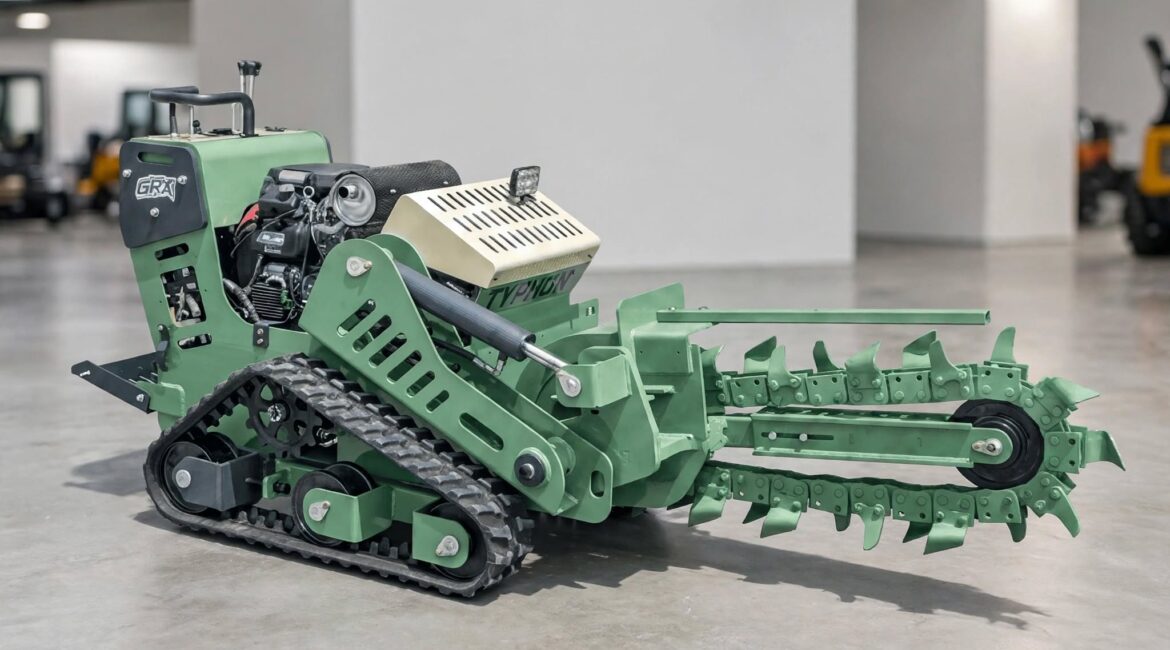
A mini skid steer trencher attachment costs add up fast. The purchase price is only the start. Teeth wear out. Chains stretch. Hydraulic flow must match. These hidden costs surprise new buyers.
A mini skid steer trencher attachment digs trenches for drainage, utilities, and irrigation. It turns a loader into a dedicated trenching machine. The mini skid steer trencher attachment saves time, saves labor, and makes serious money for the contractors who use it effectively.
This guide covers 7 critical costs to review before buying in 2026. Each cost affects your budget and long-term profitability. Understanding these numbers helps make the right decision.
Table of Contents
The purchase price is the first cost you evaluate. A mini skid steer trencher attachment comes in three types, and each type commands a different price point based on its capabilities.
- Standard trencher: $2,000 to $3,500. This type handles general digging. It works well in soil, sand, and soft clay, with a digging depth of 24 to 48 inches.
- Heavy-duty trencher: $3,500 to $5,500. This type handles tough conditions like rock, hard clay, and frozen ground. The chain features durable carbide teeth, and the boom is heavily reinforced.
- Offset trencher: $3,000 to $4,500. This specific type digs next to structures. The boom offsets to the side, allowing you to work along foundations and walls.
The purchase price includes the mini skid steer trencher attachment itself. It does not include hydraulic hoses, couplers, or spare teeth. Those are extra costs to factor into your initial budget.
The mini skid steer trencher attachment needs hydraulic flow to operate. The machine must provide enough flow because low flow means slow digging and poor performance.
Most models of the mini skid steer trencher attachment need 8 to 12 gallons per minute to operate correctly. Some heavy-duty models need up to 15 GPM. Always check your loader’s auxiliary flow before buying.
If the machine has low flow, the mini skid steer trencher attachment does not work properly. The operator must then upgrade the machine’s hydraulic capabilities or buy a smaller attachment. A hydraulic flow upgrade costs $1,500 to $3,000. This upgrade includes a new pump, hoses, and valves—a cost that is often overlooked.
Teeth wear out and break on any mini skid steer trencher attachment. They need regular replacement, and this recurring cost adds up significantly over the equipment’s life.
Standard Teeth
Cost $150 to $300 per set. Suitable for soft, sandy soils that wear teeth slowly.
Carbide Teeth
Cost $300 to $600 per set. They cost more upfront but last much longer in rocky soils.
Tooth life depends heavily on the ground conditions. A standard set of teeth lasts 50 to 200 hours. The operator replaces teeth 5 to 20 times over the mini skid steer trencher attachment life cycle.
Calculate the annual cost. If teeth last 100 hours, and the machine runs 500 hours per year, the operator replaces teeth 5 times per year. At $300 per set, that is $1,500 per year. Over five years, that totals $7,500.
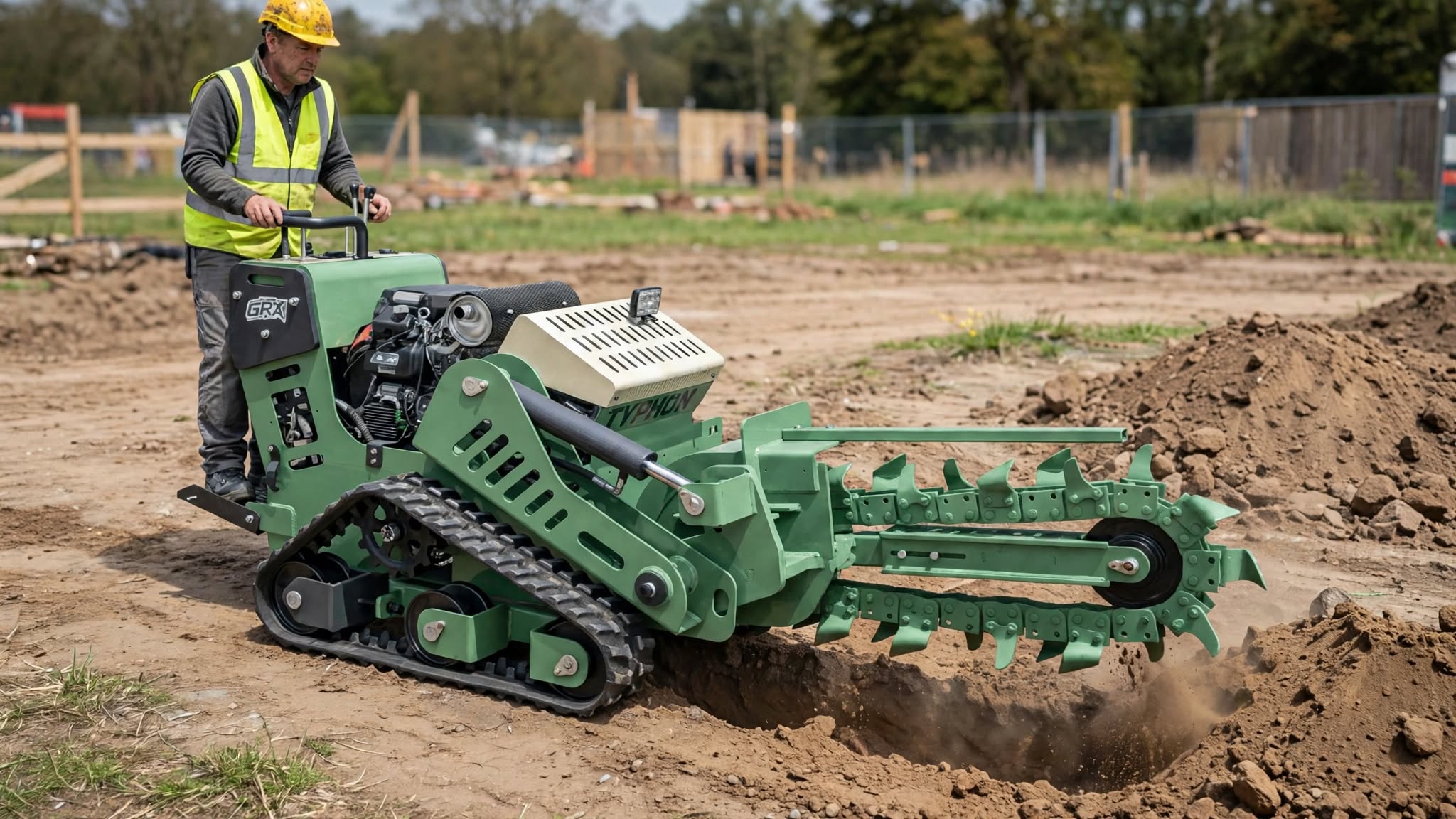
The digging chain on your mini skid steer trencher attachment stretches. The chain wears, and eventually, the chain breaks. Routine replacement is absolutely necessary.
A replacement chain costs $200 to $500. The chain typically lasts 500 to 1,000 hours, meaning the operator replaces the chain once or twice per year. Chain wear depends entirely on maintenance. A loose chain wears fast, and a tight chain wears fast. Proper tension extends the life of your mini skid steer trencher attachment.
Chain replacement takes 1 to 2 hours. Doing the work yourself saves money, as dealer labor costs $100 to $200 per hour.
Your mini skid steer trencher attachment needs regular maintenance. Grease, oil, and inspections take time and money.
Grease fittings need grease every 8 hours. A tube of grease costs $5, and a grease gun costs $30. Greasing 3 to 5 fittings per service takes 10 minutes. Hydraulic fluid levels drop over time and need topping off. Hoses crack and leak. Replacement hoses cost $50 to $150 each, and a full set of hoses costs $300 to $500.
Annual maintenance for a mini skid steer trencher attachment is $500 to $1,000. This includes grease, fluid, and standard replacement parts.
Downtime costs money. When the mini skid steer trencher attachment breaks, work stops. The operator loses billable hours, the client waits, and the schedule slips.
Common downtime causes include tooth breakage, chain breakage, hydraulic leaks, and boom damage. Each cause immediately halts production. Downtime cost per day is $500 to $1,000 in lost revenue. This is the hidden cost of a broken tool.
Prevent downtime by inspecting your mini skid steer trencher attachment daily. Check chain tension, inspect hoses, and fix small problems before they become massive failures.
Opportunity cost is the money not earned. Buying the wrong mini skid steer trencher attachment wastes money. Buying an attachment that does not fit the machine or match the job profile is a costly error.
A standard trencher does not dig rock. Buying one for rocky ground wastes money because the operator must buy a heavy-duty trencher later. Conversely, buying an expensive heavy-duty trencher for soft sandy soil wastes money because the extra capability isn’t needed.
Match the mini skid steer trencher attachment to the machine and to the work. This simple alignment prevents massive opportunity costs.
Add the costs over five years for a typical mini skid steer trencher attachment:
| Expense Category | Estimated Cost (5 Years) |
|---|---|
| Purchase Price | $3,000 |
| Hydraulic Upgrade | $2,000 |
| Tooth Replacement | $7,500 |
| Chain Replacement | $1,500 |
| Maintenance | $3,000 |
| Downtime | $2,000 |
| Total 5-Year Cost | $19,000 |
The purchase price is only 16 percent of the total cost. The other costs make up 84 percent. Buyers who focus only on purchase price miss the big picture. Choose the right mini skid steer trencher attachment type. Maintain it well, buy quality carbide teeth for tough ground, and perform the maintenance yourself to reduce dealer labor costs.
Many buyers find that if a machine only has 10 GPM but the mini skid steer trencher attachment needs 12 GPM, it digs slowly. Upgrading the hydraulics costs $2,000. Attempting to use standard teeth in rocky soil costs $1,800 per year in replacements. Replacing broken chains repeatedly adds $1,200. Total costs skyrocket when the wrong tool is selected. To understand how machine setup impacts overall costs, read our guide on skid steer tracks vs tires 6 costs.
Key specifications affect the performance and cost of a mini skid steer trencher attachment:
- Digging depth: 24 to 60 inches. Deeper trenches need longer booms, which cost more.
- Trench width: 4 to 12 inches. Narrow trenches are best for cables; wide trenches for drainage.
- Chain speed: 300 to 600 feet per minute. Faster speeds for soft soil, slower speeds for hard material.
- Tooth type: Standard for soil, carbide for rock. Bolt-on teeth make for easy replacement.
- Hydraulic flow: 8 to 12 gallons per minute. Always check the machine’s GPM before buying.
Follow this schedule to extend your mini skid steer trencher attachment life:
Daily (Every 8 Hours)
Check teeth. Check chain tension. Check all hoses for leaks.
Weekly (Every 40 Hours)
Grease all fittings. Check boom bolts and tighten if loose.
Monthly (Every 100 Hours)
Replace worn teeth. Inspect the chain for stretched links and replace if necessary.
Annually (Every 500+ Hours)
Replace hydraulic fluid. Inspect and replace cracked seals. Replace chain at 1,000 hours.
Trenchers are dangerous. Call 811 before digging to avoid utility lines. Wear protective equipment. Keep people at least 20 feet away to avoid flying rocks. Finally, do not dig under foundations to avoid damaging the mini skid steer trencher attachment and the structure.
A mini skid steer trencher attachment costs include more than the purchase price. Smart buyers look at the total cost, choose the right type, match it to the machine, and prevent downtime. The right attachment pays for itself!
Need a heavy-duty trencher built for professional use? Don’t let underpowered equipment slow down your utility jobs.
Explore the Typhon GroundRipper GRX1 Compact Track Trencher →
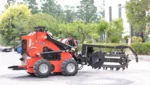
[…] GroundRipper GRX1 is built for trenching applications. Controlled cutting and efficient ground preparation are essential in these applications. It is […]