
Table of Contents
Your mini skid steer moves material. It lifts heavy loads. It powers attachments. None of this works without a functional hydraulic pump. The hydraulic pump is the heart of your machine. When the hydraulic pump fails, the machine stops. You lose billable hours, you lose money, and you lose client trust.
Most contractors ignore early warning signs. They wait until the component dies completely, then they pay thousands for repairs. You do not need to be that contractor.
This guide shows you 3 signs of failure. Each sign appears before complete breakdown. Each sign gives you time to act, helping you save money and downtime.
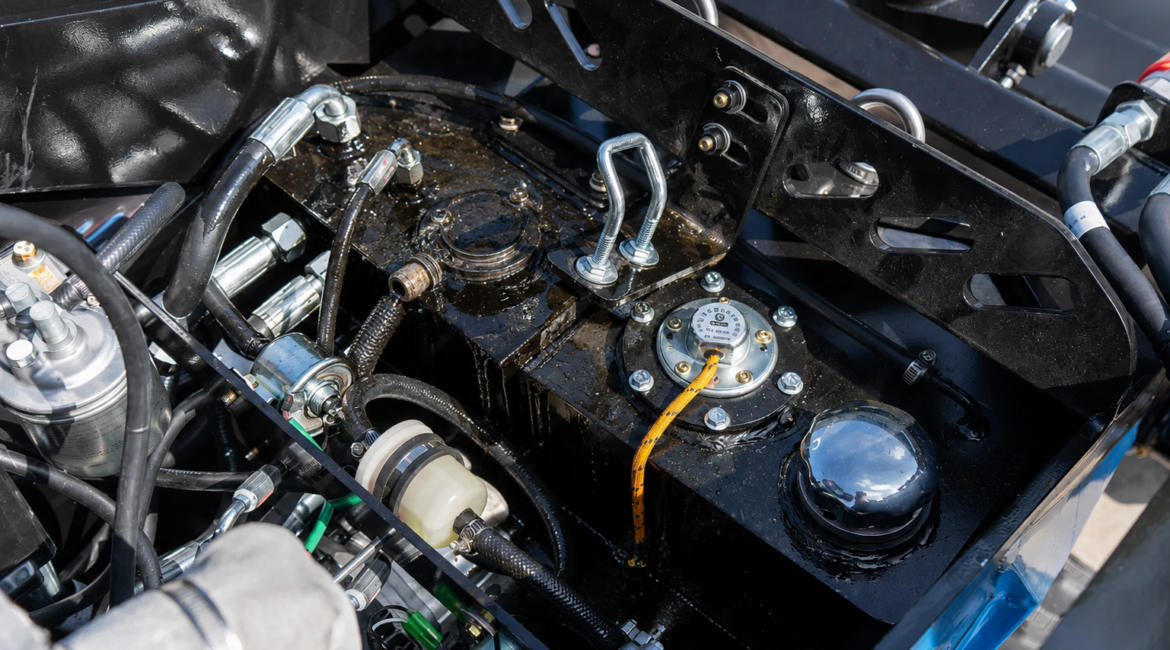
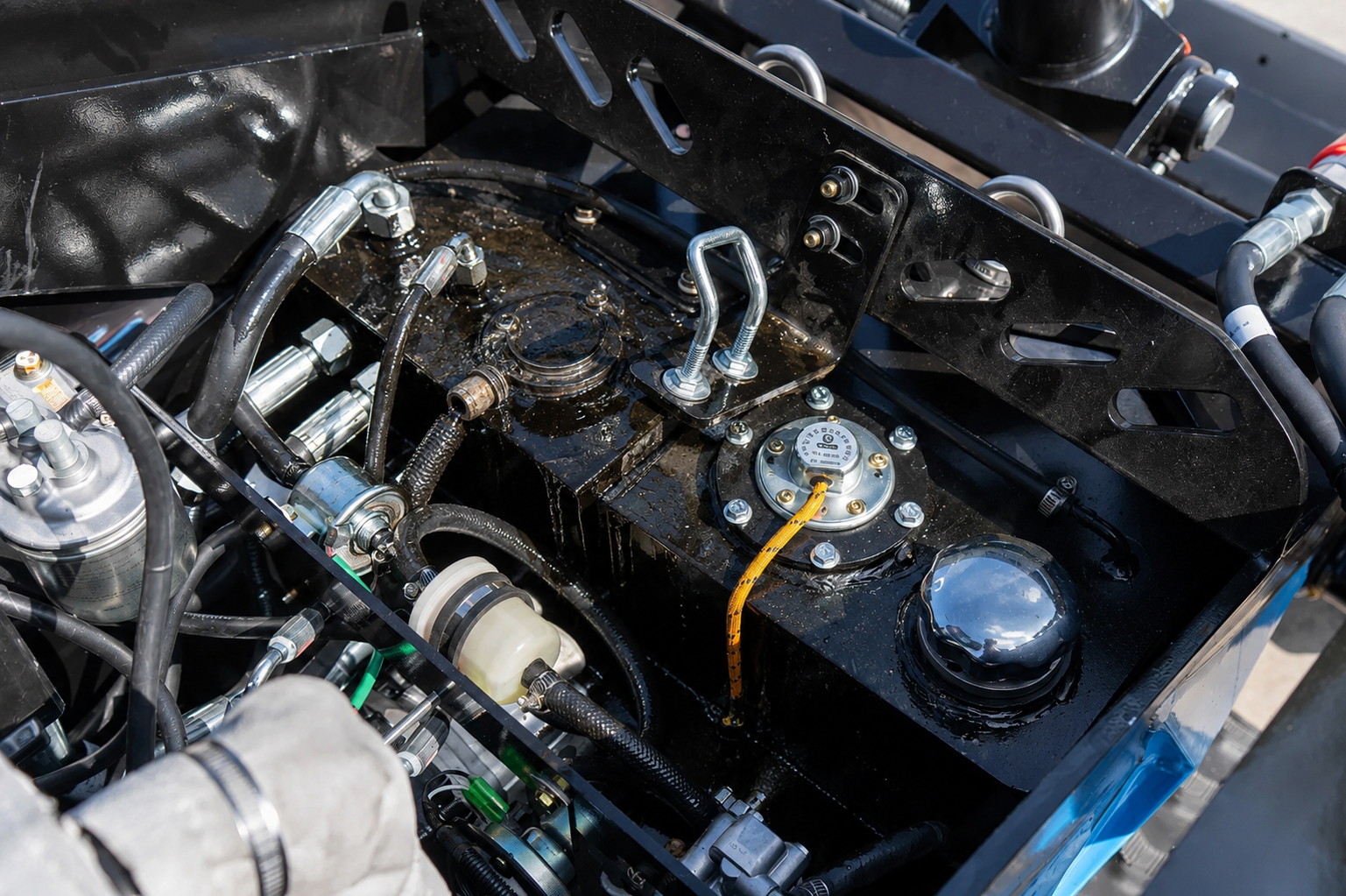
Your mini skid steer has a complex fluid system. The system has three main parts. The hydraulic pump draws fluid from the reservoir. The hydraulic pump pushes fluid through hoses to control valves. You move the joystick, the valve opens, fluid flows to a cylinder, and the cylinder extends or retracts. Your attachment moves.
The Typhoon STOMP X1300 uses a three-piston pump system. One pump powers the drive motors. One pump powers the lift arm. One pump powers the auxiliary circuit for attachments. Each unit works independently. If one hydraulic pump fails, you lose one function. You do not lose the entire machine.
This intelligent design saves you money because you replace one hydraulic pump instead of the whole assembly. But you must catch the failure early. You can read more about how this machine outperforms the competition in our mini skid steer X1300 comparison.
Your mini skid steer lifts slower than last week. The bucket curls with less force, and the machine drives with less power. These are early signs of hydraulic pump wear.
Wear reduces pressure, and pressure is what pushes fluid through the system. Less pressure means less force. Less force means slower operation. Here is the test for slow operation:
Healthy Lift Time
New hydraulic pump lift time is 3.5 to 4 seconds.
Failing Lift Time
Worn hydraulic pump lift time is 6 seconds or more.
A 2-second delay means your system has lost 30 percent efficiency. You need a rebuild or replacement. The cost of ignoring slow operation is productivity loss. A 2-second delay per lift cycle adds up. If you do 100 lift cycles per day, you lose 3.3 minutes per day. Over 200 working days, you lose 11 hours. Billable time loss is $605 at $55 per hour. That loss pays for a new hydraulic pump in 2 years.
Check your fluid level first. Low fluid causes slow operation. Top off the fluid and retest the lift time. If the time improves, you fixed the problem. If the time stays slow, the hydraulic pump is worn.
Your fluid runs hot. Normal operating temperature is 160 degrees. Your machine runs at 200 degrees. You touch the hoses and they burn your hand. This is sign number two.
Wear creates internal leakage. Fluid passes through worn clearances instead of moving to the cylinder. The friction heats the fluid, damaging seals, degrading fluid viscosity, and reducing efficiency.
A worn hydraulic pump causes heat. Heat causes fluid breakdown. Broken down fluid causes more wear. More wear causes more heat. The cycle ends with a seized hydraulic pump.
Place an infrared thermometer on the reservoir. Measure the temperature after 30 minutes of normal operation. Temperature should be 160 to 170 degrees. If temperature stays above 190 degrees, the hydraulic pump is worn.
The cost of overheating is severe. Heat damages the entire system, hardens seals, and degrades hoses. A new hydraulic pump costs $1,200. Replacing all hoses and seals adds another $700. Total repair cost hits $1,900. Do not operate a machine with overheating fluid. Stop the machine, let it cool, and fix the cause.
Your mini skid steer makes noise. Normal noise is a low hum. Worn hydraulic pump noise is a high pitched whine. You hear the whine when you lift the arms, drive forward, or operate attachments.
This hydraulic pump noise comes from cavitation. Cavitation happens when fluid does not fill the internal chambers properly. Air bubbles form, collapse against the metal, create noise, and erode the material. More erosion creates more clearance, more leakage, and more cavitation.
Here is the test for hydraulic pump noise:
- Raise the lift arms to full height. Listen. A whine on both raise and lower is a worn hydraulic pump.
- Drive forward and turn. A whine during steering is a worn drive pump.
- Run an auger. A whine during attachment operation is a worn auxiliary pump.
Do not ignore hydraulic pump noise. The cost is progressive. Metal particles enter the fluid and damage the control valves and cylinders. System contamination repair costs $3,500. Stop the machine. Check fluid levels. If noise continues, the hydraulic pump is worn.
You identified one or more signs. Now you take action. Follow this three-step process:
- Step 1. Confirm the problem: Run each test again. Document the lift time, temperature, and noise level for your repair shop.
- Step 2. Check easy fixes: Low fluid causes all three signs. Top off fluid, replace the filter, and clean the reservoir strainer.
- Step 3. Call a specialist: If signs continue, describe your tests. A specialist will test pressure. Pressure below 2,500 PSI indicates wear. Pressure below 2,000 PSI indicates failure.
You confirmed the hydraulic pump is worn. Now you have two options: repair or replace.
| Option | Upfront Cost | Downtime | Pros / Cons |
|---|---|---|---|
| Rebuild Kit + Labor | ~$700 | 2 Days | Cheaper, but takes longer and carries quality risk. |
| New Unit + Labor | ~$1,500 | 1 Day | Higher cost, but 1-year warranty and zero rebuild risk. |
Which option works for you depends on your schedule. If you have work lined up, replacement makes sense because one day of downtime costs $440. The Typhoon STOMP X1300’s independent three-piston design saves you money because you only replace the one failed unit, avoiding a full $4,100 assembly replacement.
You avoid complete failure with regular maintenance. Follow this schedule:
- Every 50 hours: Check fluid levels. Tighten loose fittings. Replace leaking hoses.
- Every 250 hours: Change the filter. Use the manufacturer specified 10-micron filter, not an automotive filter.
- Every 500 hours: Change fluid. Drain the reservoir, clean the strainer, and refill with ISO 46 fluid.
- Every 1,000 hours: Test pressure. It should be 2,800 to 3,000 PSI.
One contractor ignored the whine for 3 months. The unit seized on a Friday afternoon before a $6,000 landscaping job. He lost the job and the client. Metal particles contaminated the entire system, pushing total repair costs to $3,200. With lost revenue and relationship value, the total loss was over $24,000. A simple $1,500 replacement would have saved him $22,700.
Act within 1 week of noticing any sign. Replace the filter, change the fluid, and address the issue so your machine returns to full power, and your profit stays intact. Treat the system with respect. Fix problems early, and it will repay you with thousands of hours of reliable service.
If your machine is beyond simple repairs and you need reliable, long-lasting equipment, it might be time to upgrade. Check out the brand new Typhon STOMP mini skid steer Kubota D1105 diesel setup built for professional longevity.
View New Equipment Options →