Table of Contents
Your mini skid steer starts with a turn of the key. The lights work. The display shows data. The solenoids engage. None of this happens without a functioning electrical system.
The electrical system controls critical functions: starting, charging, safety interlocks, sensors, and gauges. When your mini skid steer electrical system fails, the machine stops. You lose billable hours, and you lose money.
Most electrical failures are preventable. Most have simple fixes. You do not need to be an electrician. You need to know the 4 common failures and their solutions.
Your mini skid steer has a 12 volt electrical system. The battery stores power. The alternator generates power while the engine runs. The starter motor turns the engine. Wiring carries power to every component. Fuses protect circuits from overload.
The Typhoon STOMP X1300 uses a standard 12 volt system with a Kubota D1105 engine. The electrical components are common across most mini skid steer models. The fixes below directly apply to your machine.
You turn the key. Nothing happens. No lights. No click. No starter engagement. This is the most common electrical failure when starting a mini skid steer. The battery is either dead or disconnected.
Common Causes
- Corroded battery terminals: Corrosion prevents power flow. The battery has power, but the power does not reach the starter.
- Loose battery cables: A loose connection creates intermittent power. The machine starts sometimes and fails other times.
- Battery discharge: The alternator does not charge. The battery drains while you work.
- Old battery: Lead acid batteries last 3 to 5 years. A 5 year old battery fails without warning.
The Fixes
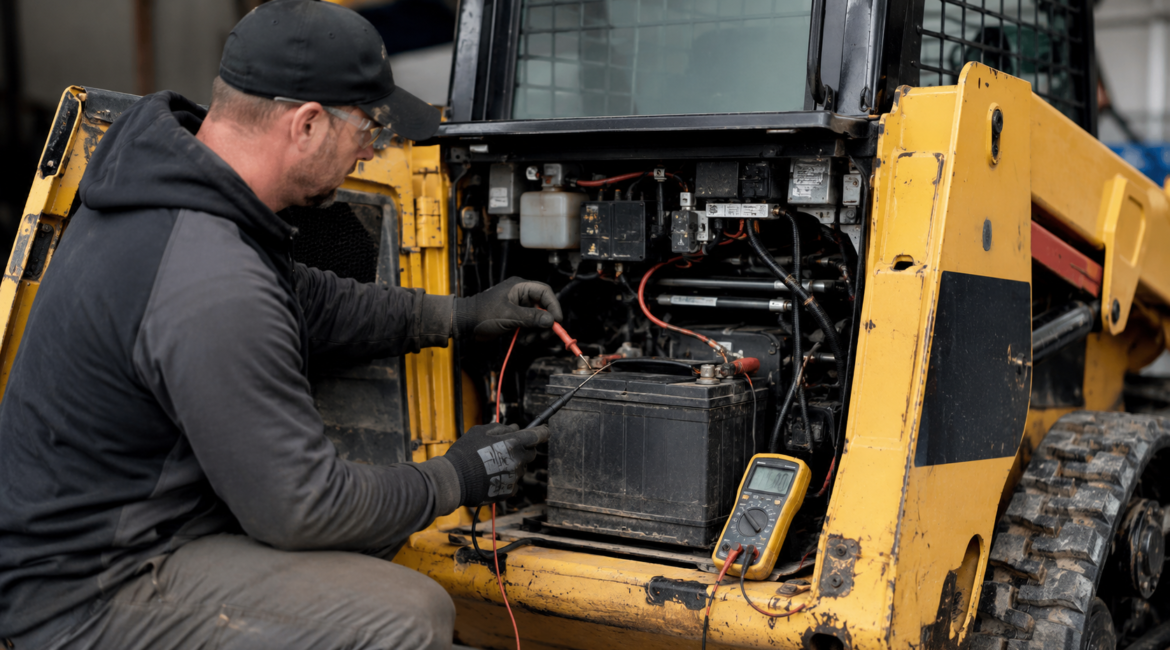
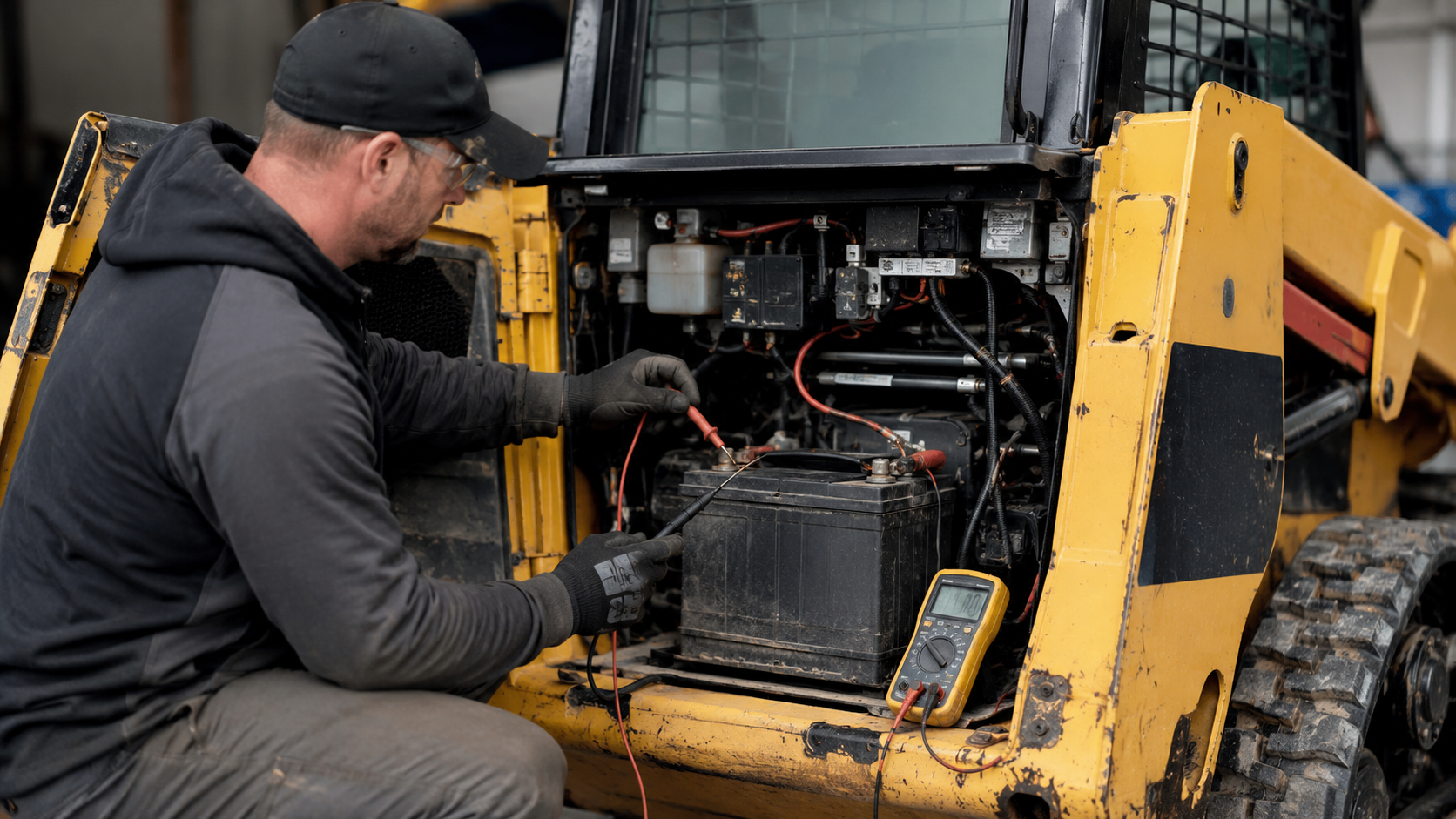
Clean battery terminals with a wire brush. Remove all white and green corrosion. Tighten the clamp securely. Use a multimeter set to DC volts to check battery voltage. A fully charged battery reads 12.6 volts or higher. Below 11.5 volts is dead and requires a replacement.
Test the alternator by checking voltage at the battery with the engine running. It should read 13.5 to 14.5 volts. Some mini skid steer machines have a master disconnect switch. Verify the switch is in the ON position.
You operate your mini skid steer. The attachment stops working. The lights go out. The display goes blank. You check the fuse box, and a fuse is blown.
Fuses protect circuits. A fuse blows when too much current flows, protecting the wiring from melting and causing a fire. Causes include short circuits, old weakened fuses, or overloaded circuits because you connect nonstandard mini skid steer attachments.
The Fix
Locate the fuse box. Look for the broken metal strip in the window. Replace it with the exact correct fuse rating.
Relay Check
A relay clicks when activated. Swap it with an identical relay; if the problem moves, replace the faulty relay.
If fuses blow repeatedly, find the short circuit. Insulate chafed wires with electrical tape. The cost of ignoring this is a melted wiring harness, which costs $400 for parts and $100 for installation.
Your mini skid steer instrument panel lights up. A warning light flashes. The engine power drops. The machine operates in limp mode.
The electrical system monitors your mini skid steer. Sensors measure engine temperature, hydraulic pressure, oil pressure, and detect water in fuel. A failed sensor, wire damage, or connector corrosion triggers a false warning light.
| Action | Detail |
|---|---|
| Read the Error Code | Look at the instrument panel to identify the specific failing sensor. |
| Check Connectors | Unplug and inspect for corrosion. Clean with electrical contact cleaner. |
| Test the Sensor & Wiring | Use a multimeter for resistance and continuity. Repair broken wires with heat shrink. |
The cost of ignoring sensors is high. A failed temperature sensor causes real engine overheating that damages cylinder heads, costing $1,200.
You are in the seat. You fasten the seat belt. You engage the controls. The machine does not move. The safety interlock on your mini skid steer is preventing operation.
A mini skid steer does not operate unless specific conditions are met: seat switch, neutral switch, and brake switch must all be closed. A failed interlock stops your work.
- Failed Seat Switch: Bypass the switch by jumpering the two wires. If the machine starts, replace the seat switch.
- Failed Neutral Switch: Ensure the joystick is in the neutral detent. Adjust linkage if it does not return to center.
- Failed Brake Switch: The system locks mini skid steer drive functions if it thinks the parking brake is engaged. Verify the brake is fully released.
The cost of ignoring interlocks is $800, but bypassing a safety switch permanently is fatal in a rollover.
You avoid these 4 mini skid steer failures with routine checks. Follow this schedule:
- Every 50 hours: Check battery terminals for corrosion, tighten clamps, check alternator belt, and inspect under-seat wiring.
- Every 250 hours: Check all fuses, verify relay clicking, and apply dielectric grease to sensor connectors.
- Every 500 hours: Test battery voltage, test alternator output, and verify all safety interlock switches function properly.
- Every year: Replace the battery if it is older than 3 years. Clean all ground connections.
One mini skid steer contractor ignored a flickering instrument panel warning. He thought the light was loose. It was actually a warning for low battery voltage because the alternator was failing. He worked through the day until the battery drained completely. The mini skid steer died at 4 PM on a $4,000 job.
He needed a jump start, but the battery was completely dead. He needed a new battery and alternator (Total: $350). He lost 4 hours of production ($220) and missed the deadline, causing the client to pay only 50 percent of the contract (Lost revenue: $2,000). A $350 repair became a $2,570 loss.
Act within 1 week of noticing any warning signs. Clean the terminals and check the fuses. Your mini skid steer returns to reliable operation, and your profit stays intact. If your starting issues turn out to be related to the hydraulics, be sure to check out our guide on the mini skid steer hydraulic pump for further troubleshooting.
Your electrical system powers your business. Treat it with respect, listen to its warnings, and fix problems early. If you’re tired of troubleshooting old wiring and want a machine built with premium components, upgrade your mini skid steer today.
View the Brand New Typhon STOMP X1300 Mini Skid Steer Loader →