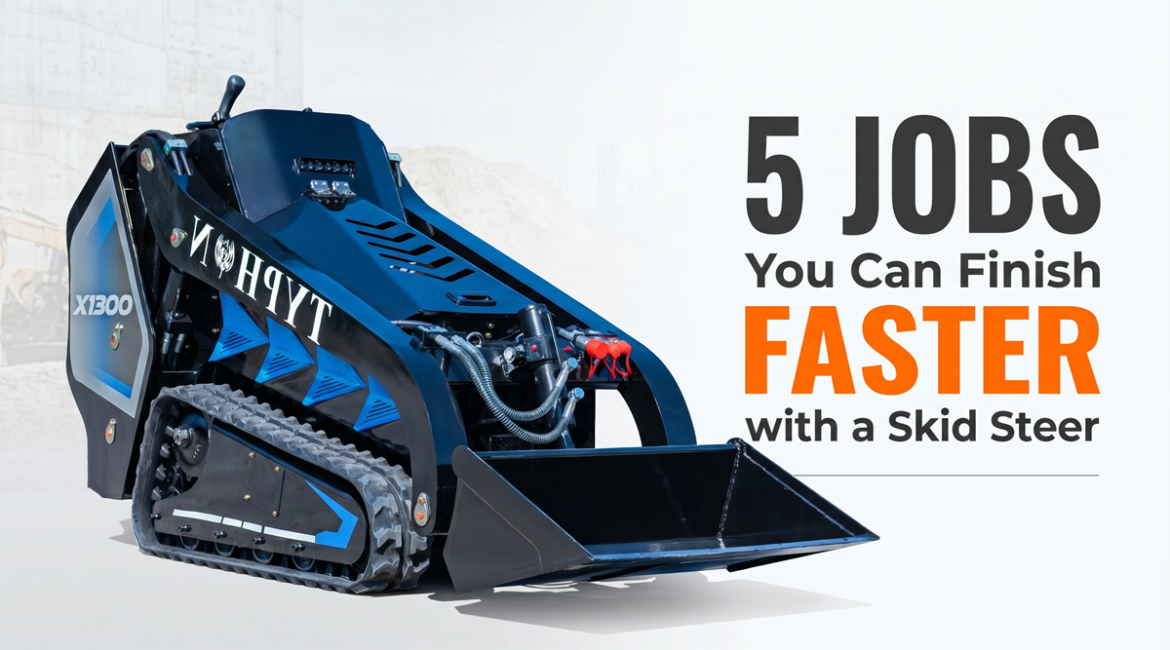
5 Jobs Where a Mini Skid Steer Saves You Time and Money
Table of Contents
If you’ve ever watched three guys with shovels spend half a day on a job that one machine could wrap up before lunch, you already know the problem. Labor is expensive. Time is expensive. Doing heavy work by hand when the right equipment exists is just throwing both away.
A mini skid steer loader fixes a lot of that. It’s small, it’s versatile, and with the correct attachments, it can handle work that used to require a full team. If you’re a contractor, landscaper, or property owner doing outdoor work every day, there’s a strong argument for having one on your crew.
Here are 5 jobs where a compact loader definitely speeds things up — and why that matters for your bottom line.
In simple terms, it’s a small, self-propelled machine with lift arms that accept switchable attachments. Think of it as a platform. The machine itself moves materials and delivers hydraulic power. The attachment defines the actual job it does.
A compact loader is smaller than a full-size machine, so it fits through tight spaces, between structures, and into backyards where heavy equipment can’t go. Most models weigh between 1,500 and 4,500 pounds. They run on tracks or wheels, and many can be trailered with a standard pickup truck.
That portability is one of the biggest advantages. You’re not calling in a flatbed for every task. You load it up and go.
Removing overgrown bushes by hand is hard work. A team hacking through brush, moving debris, and collecting it manually can burn through an entire day on a job a compact machine could finish in a few hours.
With a grapple attachment, you can grab and move heavy brush, logs, and debris without anyone handling it by hand. A brush cutter attachment lets you cut through dense vegetation that would stop a common lawnmower cold. The machine does the heavy lifting — literally.
For heavy debris, a grapple bucket performs better than a standard bucket. It grabs instead of scoops, which means less spilling and faster loading. This is one area where the right attachment pays for itself fast. One grapple replaces hours of manual labor every single time you use it.
Getting ground perfectly level before a pour, a patio, or a lawn install takes patience. By hand, it involves a lot of raking, checking, adjusting, and raking again. It’s slow and it’s rarely as accurate as it needs to be.
A skid steer with a grading bucket or box blade cuts that process way down. You’re moving and smoothing more material with each pass. You’re not getting tired. And you’re doing it consistently, without the unevenness that comes from manual work done at the end of a long day.
Using a compact skid steer for landscaping prep work is one of the most common applications for a reason. It just works.
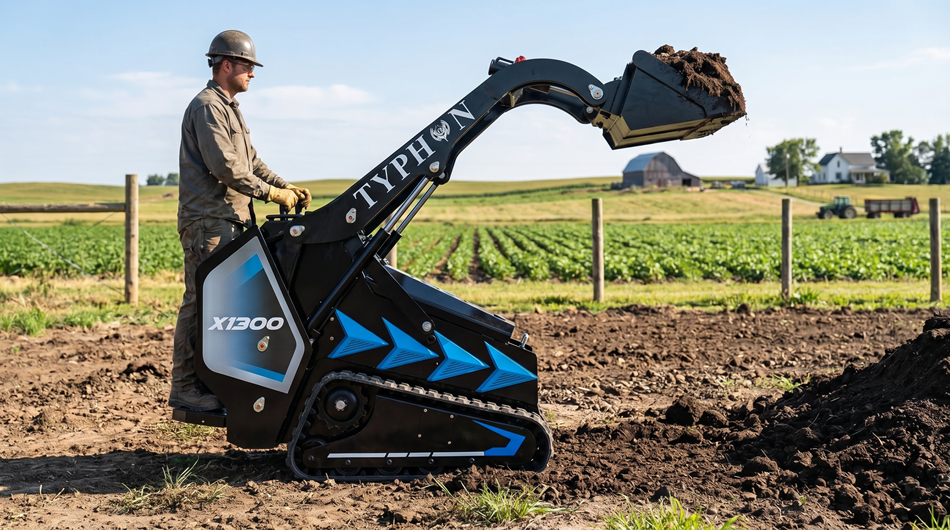
If you install fencing, irrigation, drainage, or utilities, you know how slow hand-digging gets. An auger or trencher attachment on a skid steer changes that completely.
- An auger attachment drills clean post holes in a fraction of the time it takes manually
- A trencher attachment cuts long, consistent ditches for pipe or conduit runs
- Both work in soil conditions that would exhaust a crew with hand tools
The hydraulic power of even a small skid steer handles rocky or compacted ground that manual digging simply can’t. And because the machine does the force work, your crew isn’t worn out by 10 a.m.
Moving material around a job site sounds simple. It isn’t. Gravel, topsoil, mulch, concrete debris — these things are heavy, and moving them by wheelbarrow or by hand eats up time constantly throughout a job.
A standard skid steer bucket can move several hundred pounds per load. You make fewer trips. You move more material per hour. And you free up your crew to focus on the skilled work that actually needs human hands.
If you’re in a region that gets real winters, snow removal is a solid revenue stream. A mini skid steer with a snow blower or bucket can clear driveways, parking lots, and paths faster than most dedicated snow equipment.
The skid steer is already earning in spring, summer, and fall. Adding snow removal in winter means it works year-round instead of sitting idle. That changes the ROI calculation completely. Many property maintenance companies use skid steers specifically because they’re not single-season tools.
▶ See It In Action
A mini skid steer without attachments is helpful. But with the right attachments, it becomes a completely different machine.
- Bucket — standard, rock, or high-capacity
- Auger — to drill holes and footings
- Trencher — for irrigation, drainage, and utility lines
- Grapple — for brush, debris, and demolition materials
- Brush cutter — for overgrown vegetation
- Snow blower — for winter snow clearing
- Pallet forks — for material delivery and staging
Each attachment you add is another job type you can take on. That directly increases what the machine earns — and how fast you recover your investment.
Renting makes sense for one-off jobs. But if you’re using a compact loader daily, renting gets expensive fast. Skid steer rental rates typically run $300 to $500 per day depending on size and location. A week of renting can cover a substantial chunk of a purchase payment.
Beyond the math, owning means the machine is available when you need it — not when the rental company has one free. That skid steer availability has real value when you’re planning jobs and managing customer expectations.
| Renting | Owning | |
|---|---|---|
| Daily cost | $300 – $500 | Fixed payment |
| Availability | When they have one | Always available |
| Long-term cost | Keeps adding up | Decreases per use |
| Attachments | Limited options | Your own set |
Buying the Wrong Size
A larger skid steer moves more material, but won’t fit through gates or into confined spaces. Think about where you work most often before you commit to a size.
Ignoring Hydraulic Flow
Attachments like augers and brush cutters require high hydraulic flow to work properly. A machine with low flow will significantly underperform with those attachments. Always check the specifications first.
Skipping the Attachment Budget
The machine is only part of the cost. Budget for at least two or three attachments upfront — otherwise you’re limiting what it can do and extending your payback period unnecessarily.
🌿 Landscapers
Regular grading, planting, and site prep work. A compact loader speeds up every stage.
🔨 Contractors
Residential and light commercial jobs. Move materials, clear sites, dig trenches fast.
📍 Fencing & Utility Crews
If you dig often, an auger attachment alone justifies the machine.
🏠 Property Managers
Maintaining large sites year-round. One machine replaces seasonal equipment.
If you’re doing this kind of work more than a few times a month, the math tends to work out in favor of owning. The more you use it, the cheaper each job effectively becomes.
🔗 Watch: Full Compact Skid Steer Comparison
Watch Full Comparison on YouTube →A mini skid steer isn’t a magic solution — but for the right contractor or property professional, it changes how quickly you move through work, how much you can take on, and how much you spend on labor to get there.
Explore the Auger Attachment →
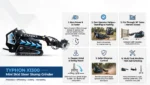
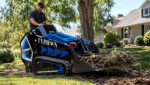
[…] mini skid steer loader is a compact yet versatile and powerful machine, a powerful machine with lift arms at the front. […]
[…] tow the X1300 mini skid steer with your existing work truck. You do not need a one-ton diesel. You do not need a gooseneck […]