Why a Mini Skid Steer Is the Smart Choice for Small Farms, Landscaping, and Construction
Table of Contents
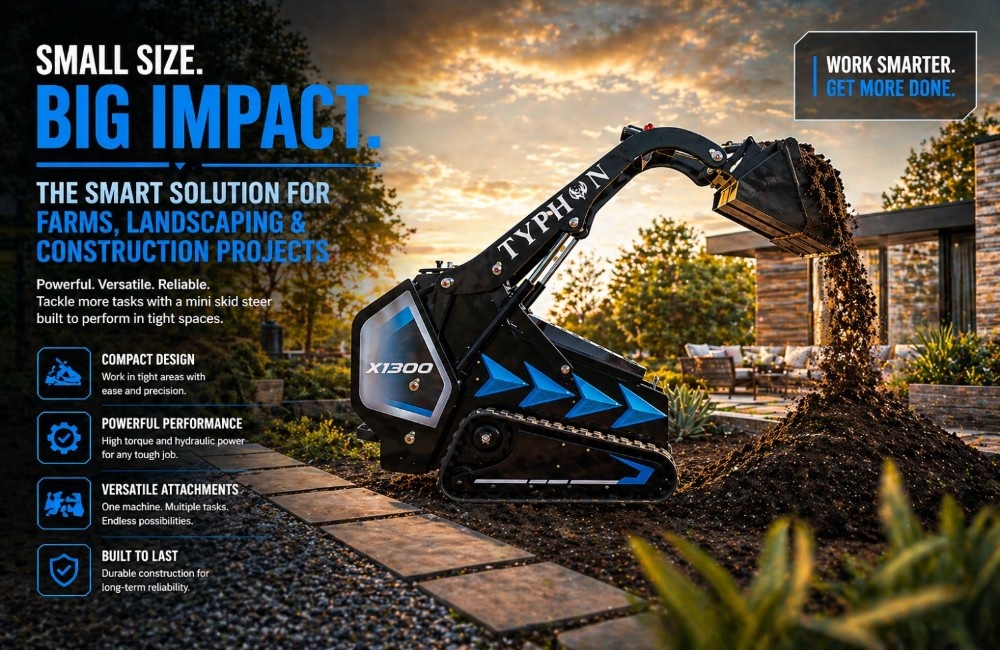
You own a small farm. You run a landscaping crew. You operate a construction business. You need equipment that works hard and costs less.
A mini skid steer fits all three worlds. Here is why.
Farms have tight spaces. Barn aisles are 6 feet wide. Chicken coop doors are 4 feet wide. Tractor paths run between trees. A full-size tractor does not fit. A mini skid steer fits where tractors cannot go. Width is under 48 inches. Length is around 65 inches. You drive through a standard barn door. You turn around inside a horse stall. You work in a hay shed without backing up every 10 feet.
Farm work needs versatility. The machine cleans horse stalls with a bucket. It moves hay bales with forks. It spreads bedding in chicken coops. It clears snow from the driveway. It digs fence post holes with an auger. It moves feed pallets from the truck to the storage shed. The diesel engine runs on the same fuel as your tractor and truck — one fuel can for all equipment.
🍇 Real Farm Example — Wisconsin
A small farm owner with a 20-acre property cleans 12 horse stalls every morning. By hand, the job took 2 hours. With a compact machine, it takes 40 minutes. He saves 80 minutes per day — time now spent fixing fences and checking pastures.
Cleaning Livestock Pens
Scoop manure and used bedding. Dump into a spreader or compost pile in one clean pass.
Moving Round Bales
One bale weighs 800 pounds. The compact machine lifts 800 pounds. Pick up one bale at a time and move it directly to the feeding area.
Trenching Water Lines
Dig a 24-inch deep trench from the well to the barn. Lay the pipe. Backfill the trench. The job finishes in one afternoon instead of three weekends.
Clearing Brush
Pull small trees and shrubs from fence lines. Pile brush for burning. The grapple attachment picks up everything in one grip.
Grading Driveways
A gravel driveway needs grading twice per year. Spread new gravel evenly, fill potholes, and smooth washboard bumps — all in one pass.
You work on residential properties. Backyards have gates. Lawns need protection. Crew costs eat your profit. A mini skid steer solves these problems. It fits through a 48-inch gate. It leaves no ruts on finished lawns. It replaces two laborers on every job.
🌿 Real Landscaping Example — Florida
A landscaping crew uses a compact machine for all residential work. One operator runs the machine. Two crew members plant and trim. The crew finishes 3 jobs per day. Without the machine, the same crew finishes 1.5 jobs per day. The machine doubles production.
Sod Installation
Move pallets of sod from the driveway to the backyard in loads. No wheelbarrows. No torn sod. Each roll goes exactly where it needs to go.
Tree and Shrub Planting
Dig a hole with an auger attachment. Lower the tree. Backfill with soil. Move to the next hole. One person plants 30 trees per day — the same task takes 3 people by hand.
Grading and Leveling
A new lawn needs 2 inches of topsoil spread evenly. A grading bar levels the soil in one pass. A hand crew takes 3 times longer and the finish is rougher.
Mulch and Soil Delivery
Your truck dumps 5 yards of mulch on the driveway. The mini skid steer moves it all to flower beds in 1 hour. A hand crew with wheelbarrows takes 3 hours.
Patio and Walkway Base
Dig out 6 inches of soil for a new patio in 30 minutes. Hand digging takes 4 hours. The machine loads removed soil directly into a truck.
You build small structures. You pour concrete driveways. You run electrical and plumbing lines. You need a machine that moves material and digs trenches. A mini skid steer does both. It carries lumber from the truck to the building site. It digs trenches for footings. It loads debris into dumpsters.
🏗 Real Construction Example — Ohio
A concrete contractor uses a compact machine for small driveways and patios. He loads mix from his mixer into the bucket and drives directly to the forms. His hand crew used to move mud with wheelbarrows. The machine cuts pour time in half.
Trenching for Utilities
Dig a 24-inch deep trench for electrical or plumbing lines in one pass. A hand crew digs the same trench in a full day.
Indoor Demolition
Roll through a standard door. Break a bathroom floor with a breaker attachment. Scoop debris with the bucket. Load into a dumpster outside. One machine does the work of five people with sledgehammers.
Loading Debris
A demolition job produces 5 tons of concrete and wood. The compact machine loads the debris into a dump truck in 2 hours. Hand loading takes 8 hours with a crew of 3.
Moving Materials
A framing crew needs lumber at the back of a house. The machine carries a full bunk of 2x4s through the side gate. The crew grabs material directly from the bucket. No hand carrying from the street.
Backfilling Foundations
Push soil back into the hole and compact it with the bucket edge. The job takes 1 hour. Hand backfilling takes 4 hours.
| Reason | Detail |
|---|---|
| Fits through gates | Most backyard gates are 48 inches wide. Larger machines do not fit — you work by hand. |
| Does not tear up lawns | Floats over soft ground. Your customer does not pay for lawn repair — and calls you back. |
| Tows with a half-ton truck | No need to buy a heavy-duty diesel. Save $50,000 on a tow rig. |
| Runs on low fuel | 0.5 gallons per hour vs 1.5 for a larger machine. Save $20 per day in fuel. |
| One person operates it | No helper needed. No second person. Keep your crew small and your profit high. |
Do this work on time. Regular maintenance keeps your machine running and your repair bills low.
| Interval | Task | Cost |
|---|---|---|
| Every 20 hrs | Grease 6 loader arm fittings with a hand grease gun | $0 |
| Every 50 hrs | Check track tension (1–1.5″ sag). Clean radiator fins with compressed air | $0 |
| Every 250 hrs | Change engine oil (3–4 qts 15W40 diesel) + oil filter | ~$12 |
| Every 500 hrs | Change hydraulic return filter. Check all hydraulic hoses | ~$35 |
| Every 1,000 hrs | Change hydraulic oil (5 gal). Check drive belt for cracks | ~$60 |
| Track life | 800–1,200 hrs on normal ground. Concrete/asphalt cuts life in half | Varies |
✅ Buy If You…
- Work on residential lawns, landscaping, backyards
- Tow with a half-ton pickup
- Want low operating costs — $3/day fuel, $40 oil changes
- Work alone or with a small crew
- Need to fit through 48-inch gates
❌ Skip If You…
- Lift heavy pallets over 800 lbs regularly
- Load high-side dump trucks all day
- Work on open commercial sites where size doesn’t matter
Find a dealer near you. Ask for a demo of a mini skid steer. Test it on your own jobs. Dig a trench. Move a pile of dirt. Load your trailer. See the difference a compact machine makes.
It is not the biggest machine. It is not the most powerful. It is the smart choice for small farms, landscaping crews, and construction contractors. You fit through the gate. You protect the lawn. You tow with your truck. You spend less on fuel. You work alone. You keep more profit.
Get a mini skid steer. Get through the gate. Get the job done. Get home earlier.
🔗 Watch Full Comparison Video
Watch on YouTube →Stop paying for hand labor on every job. Stop leaving the machine on the trailer because it does not fit. A mini skid steer works on farms, landscaping sites, and construction jobs — and pays for itself fast.
Learn More →