Table of Contents
Your mini skid steer moves on rubber tracks. Tracks provide traction on mud and gravel. Tracks protect your lawn and pavement. Tracks smooth the ride over rough ground.
Tracks wear out. Worn tracks cost you money, and a broken track stops your job entirely. You lose time. You lose profit. You pay for towing and repairs. To prevent this, you need to know the right time for a track replacement.
Most contractors schedule a track replacement too early, wasting money. Others replace tracks too late, breaking parts. This guide shows you when to change tracks and how to save on every track replacement.
Your mini skid steer uses rubber tracks that wrap around drive sprockets and idler wheels. The drive sprocket turns, the track moves, and the machine moves.
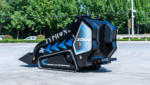
Each track has a rubber compound that includes steel or Kevlar cords. The cords provide strength, while the rubber provides grip. For example, the Typhoon STOMP X1300 uses 8-inch wide rubber tracks with a specific tread pattern for traction. The tracks wear with use, and how long they last depends heavily on your operating surface and habits.
The timing for this maintenance depends on three factors: hours of use, surface type, and operator habits.
Average track life is 800 to 1,200 hours. Operators on concrete get 800 hours. Operators on dirt get 1,200 hours. Aggressive operators who spin the machine constantly get 500 hours. Here are the 4 signs that tell you when to change tracks:
- Sign 1. Visible cracking: Deep cracks through the rubber allow water to enter the cords. Cords rust and break, snapping the track entirely.
- Sign 2. Missing or worn tread bars: New tracks have 0.5-inch high tread bars. Worn tracks have 0.25 inch or less. Low treads cause slipping, which damages the drive sprocket ($400 to replace).
- Sign 3. Track tension issues: If your adjustment bolt is at the maximum, the track is stretched past its service life. A thrown track costs 2 hours of labor to reinstall.
- Sign 4. Visible cords on the edge: When steel or Kevlar cords are visible on the inside edge, the track will break soon. A broken track on the job site requires a $200 service call plus towing.
A standard track replacement costs $800 to $1,200 per track. A full set costs $1,600 to $2,400. If you are preparing to change them, you can save money in three ways.
Save 1: Replace Both
One worn track and one new track cause uneven tracking, which wears out the $600 drive motor. Replace both at the same time.
Save 2: Go Aftermarket
OEM tracks cost $1,200 each. Aftermarket tracks with the same specs cost $800 each. Save $800 on a full set.
Save 3: Do it yourself. Dealer labor cost is $200 per track. That is $400 for two tracks. Replacement takes 2 hours, meaning you save $400 by doing the installation yourself.
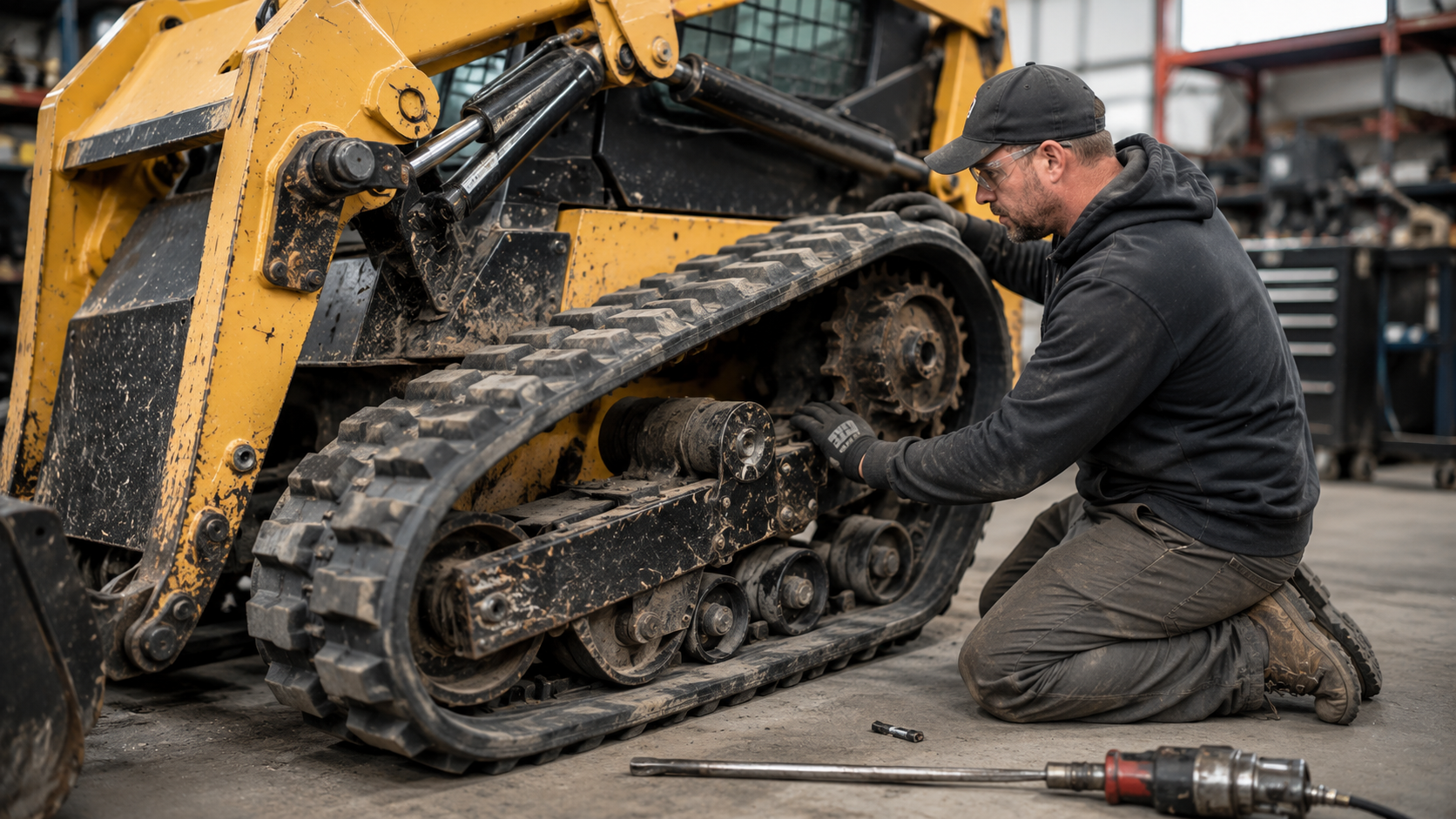
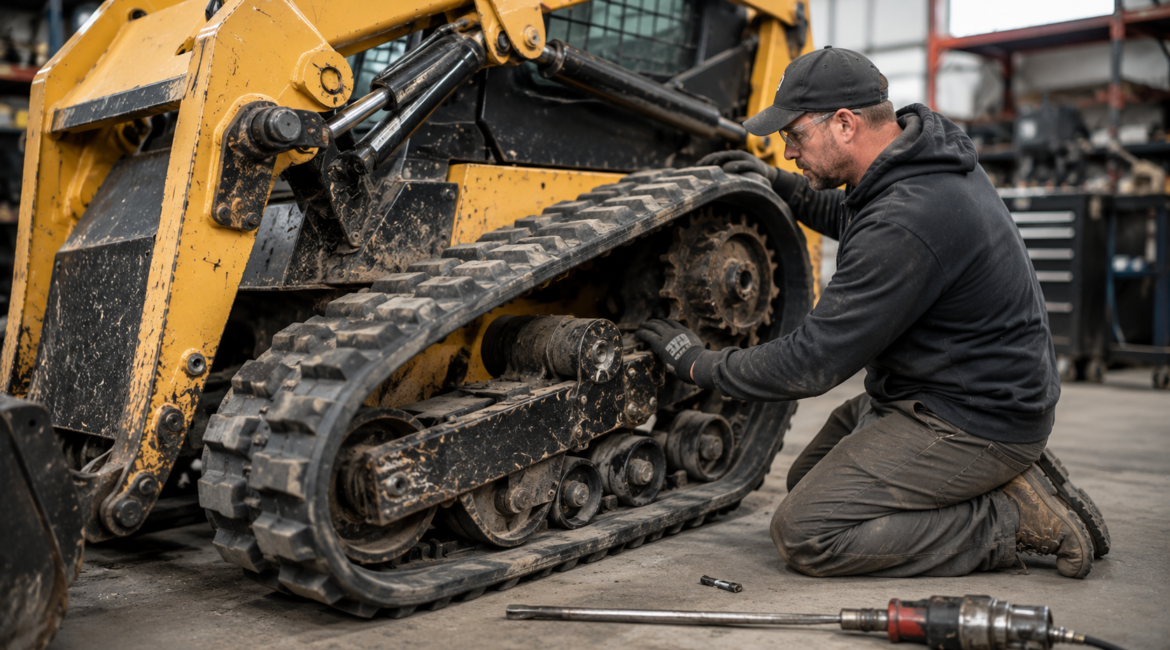
Performing a DIY track swap is straightforward. Follow this step-by-step process:
- Step 1: Park the machine on a flat, hard surface. Place blocks behind the tracks.
- Step 2: Raise the machine with a jack and place jack stands under the frame. Never work without jack stands during the process.
- Step 3: Release track tension by turning the adjustment bolt counterclockwise on the idler wheel yoke. Remove the track.
- Step 4: Install the new track over the drive sprocket first. Use a pry bar to pull it over the idler wheel gently.
- Step 5: Adjust track tension clockwise until the track has 0.5 to 0.75-inch sag at the center.
- Step 6: Repeat for the other side to ensure even performance.
- Step 7: Test the machine by driving slowly. Re-check the tension after 1 hour of operation as new tracks stretch.
If your machine throws an electrical error during this, check our guide on the mini skid steer electrical system 4 common failures before panicking.
You can delay your next track replacement with proper care. Clean tracks daily with a pressure washer to remove abrasive mud and rocks. Check tension weekly; cold weather contracts tracks, and warm weather expands them.
Avoid aggressive spinning in place—one hour of spinning equals 10 hours of normal wear. Keep away from sharp rocks and store the machine on wood or mats to prevent flat spots during winter storage.
Choose the right track for your work before buying a new set is necessary.
| Track Type | Tread Pattern | Best Use Case |
|---|---|---|
| General Purpose | Standard, evenly spaced bars | Dirt, gravel, pavement (80% of contractors) |
| Winter Tracks | Aggressive bars with sipes | Snow and frozen ground |
| Turf Tracks | Smooth, shallow bars | Landscaping on finished lawns |
One contractor ignored track cracking for 2 weeks, delaying the inevitable. The track broke on a highway shoulder 40 miles from the shop. He paid $600 for a tow, lost 2 days of work ($880 billable time loss), and paid $1,800 for parts. Total loss from this emergency track replacement was $3,280.
A second contractor inspected his tracks weekly, noticed cracks at 900 hours, and ordered tracks early. By planning ahead, he paid $1,600 for parts, zero for labor, and lost only 2 hours. The $1,680 difference buys a brand new attachment.
Here is the complete cost breakdown for a standard track replacement.
Parts (Aftermarket)
$1,600 for a full set of two tracks.
Parts (OEM)
$2,400 for a full set of two tracks.
Dealer Labor
$400 (if you skip the DIY approach).
DIY Tools
$200 (Jack, stands, and tension tool).
Total DIY cost with aftermarket tracks is $1,600. Total dealer cost with OEM tracks is $2,800. Doing a DIY install saves you $1,200.
Stop pushing off this maintenance by following this schedule:
- Every day: Clean tracks and undercarriage. Look for cuts and check tension.
- Every week: Measure tread bar height (replace below 0.25 inch).
- Every month: Inspect drive sprockets and idler wheels for flat spots.
- Every year: Replace tracks at the first sign of deep cracking before they snap.
Your tracks are your connection to the ground. Worn tracks reduce traction, damage your machine, and stop your work entirely. A timely track replacement saves you from an unexpected tow bill and severe equipment damage.
Track replacement is a normal expense. You budget for it, you plan for it, and you do not let it surprise you. A typical track replacement takes 2 hours. Replace early, save money, and keep working.
If you’re spending too much on maintenance and your machine is aging out, it might be time for a fresh start. Check out the reliable gas-powered lineup built for demanding contractors.
View Brand New Typhon STOMP Mini Skid Steers →