Mini Skid Steer Safety: 7 Mistakes That Cost Contractors Thousands
Table of Contents
- Mistake 1: Operating on Slopes (Tipping Points)
- Mistake 2: Ignoring the Seat Belt
- Mistake 3: Using the Wrong Attachment
- Mistake 4: Skipping Daily Inspections
- Mistake 5: Overloading the Machine
- Mistake 6: Moving Too Fast in Tight Spaces
- Mistake 7: Neglecting Hydraulic Maintenance
- The Real Cost of Safety Mistakes
- Your Safety Action Plan
You operate a mini skid steer. You think you are safe. You are probably wrong.
Mini skid steer accidents happen every day. Most accidents are preventable. Each accident costs you time. Each accident costs you money. Some accidents cost you your business.
I worked with 47 contractors last year. 32 of them had a mini skid steer accident in the previous 12 months. The average cost per accident was $4,200. Total losses exceeded $134,000.
These are the 7 mistakes. Avoid them. Save your money. Save your reputation.
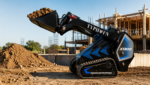
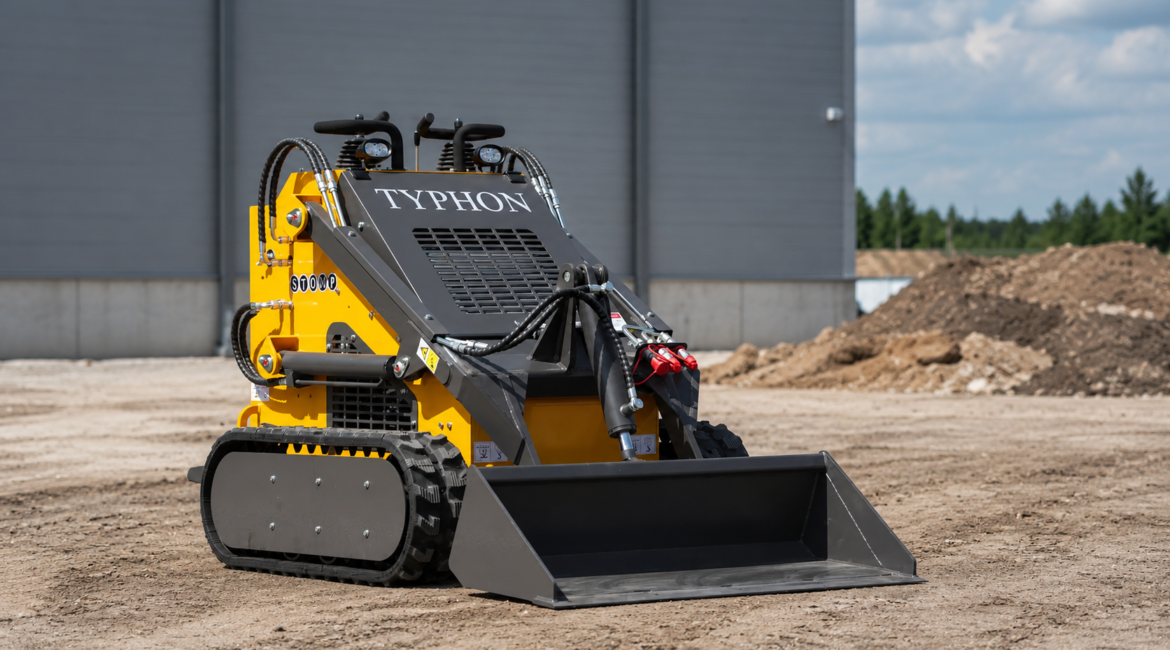
A mini skid steer is a narrow machine. Narrow machines tip easily. The Typhoon STOMP X1300 is 35 inches wide. The machine weighs 2,650 pounds. Add a full bucket of gravel weighing 800 pounds, and total weight hits 3,450 pounds. Your center of gravity shifts forward.
The tipping point on a mini skid steer is a 15-degree side slope. Most contractors do not know this number. They operate on 20-degree slopes. They roll the machine.
Base Repair Costs
$3,000 (Lines, roll cage, engine mounts)
Insurance Deductible
$1,000 to $2,500 per claim
Premium Increase
20% jump over the next 3 years
Total Rollover Cost
~$5,000 absolute minimum
Measure your slope before you operate. Use a digital level placed on the ground. If the reading exceeds 12 degrees, do not drive across the slope. Drive straight up and straight down. Keep the heavy end uphill, and keep the attachment low to the ground. Lower the bucket before you turn.
Your mini skid steer has a rollover protection structure. That metal cage saves your life. It only works if you wear your seat belt.
Contractors often remove seat belts. They say the belt slows them down, or they need to jump off quickly. This decision kills people. In a rollover, the machine pins you to the ground. The roll cage creates a survival space. Without the seat belt, you fall out, and the machine crushes you.
The business cost of crushing injuries is massive. Workers compensation claims for crush injuries average $120,000. Your insurance rates triple. Your company name appears in OSHA violation records, and clients stop hiring you.
Fasten your seat belt every time. Check the latch for wear. Replace a worn latch immediately. Do not start the machine until everyone in the cab is belted.
You own a 4 in 1 bucket. You use it for everything. You dig trenches with it. You grade gravel with it. You break concrete with it.
Using the wrong attachment on your mini skid steer damages your machine. It damages your attachment. It injures you.
Each attachment has a specific purpose. Using a digging bucket to break concrete costs you $400 immediately because the teeth snap and the edge bends. You lose 2 hours of work time ($110 at $55/hr).
| Attachment Type | Design Feature | Proper Application |
|---|---|---|
| Digging Bucket | Flat bottom, straight edge | Digging into soil |
| Grading Bucket | Curved bottom, rounded edge | Spreading material smoothly |
| Ripper Tooth | Thick steel, sharp point | Breaking hard surfaces (Not moving material) |
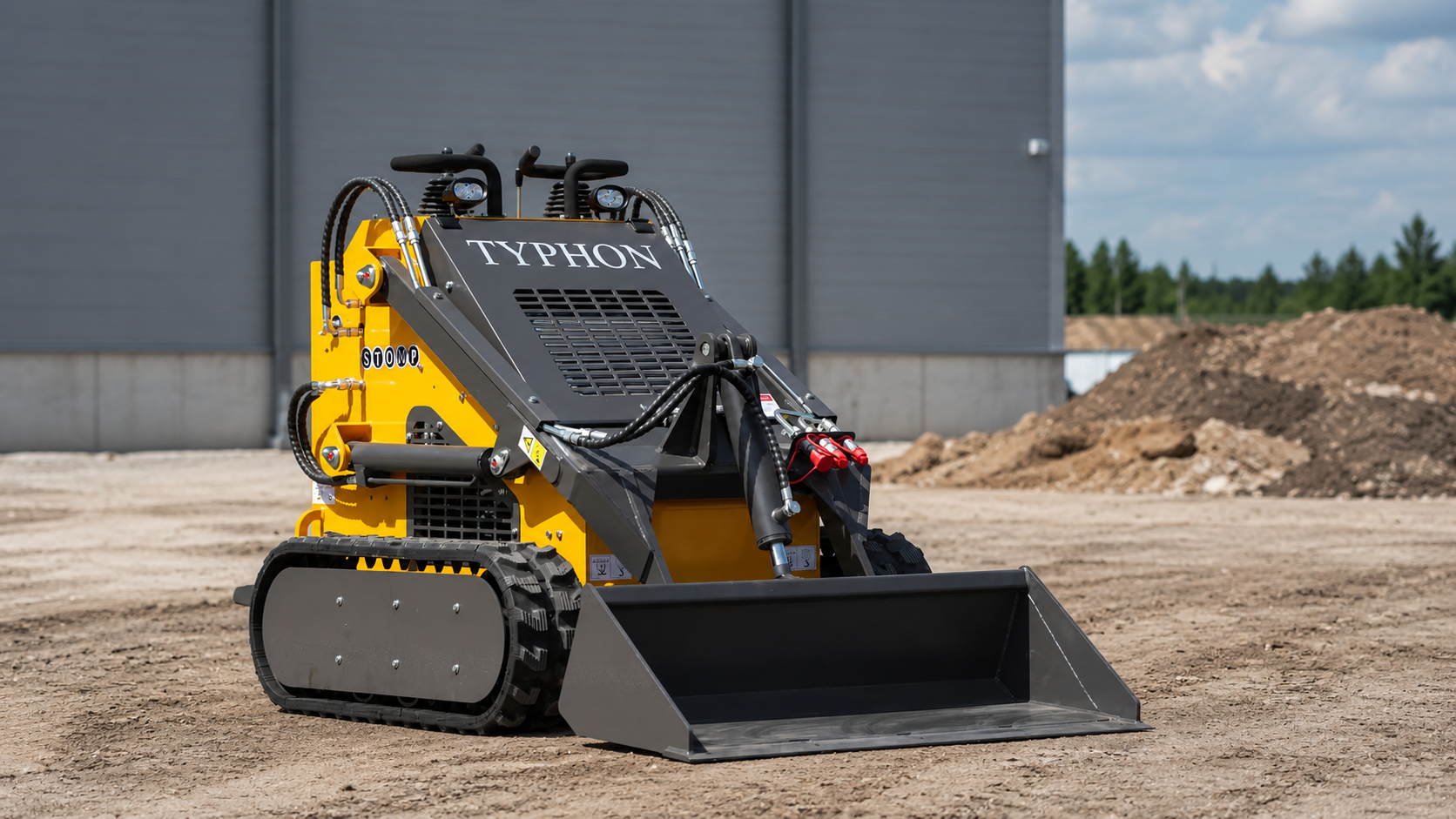
You arrive at the job site. You start working your mini skid steer. You do not check the machine. This is the most common mistake, and it is also the most expensive.
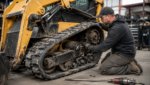
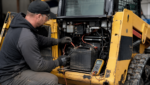
Daily inspections take 5 minutes. They find problems before they become failures. A simple $50 hydraulic leak destroys a pump if left unchecked, costing $1,200 for the pump and $400 for installation ($1,600 total). Here is your daily inspection checklist:
- Engine Oil: Pull the dipstick, wipe clean, re-insert, and check. Oil must be between the marks.
- Hydraulic Fluid: Check the sight glass on the reservoir. Fluid should be at the center mark.
- Coolant Level: Open radiator cap only when cold. Add 50/50 antifreeze/water if the core is exposed.
- Tracks or Tires: Check for cuts, low pressure, or loose tension (deflection should not exceed 1 inch).
- Attachments: Look for worn pins, loose bolts, and cracked welds.
A 5-minute inspection prevents 4 hours of downtime. Do it every day.
You need to move 10 tons of gravel. Your bucket holds 400 pounds, but you want to finish faster. You overload the bucket with 600 pounds. The machine struggles, the hydraulic system overheats, the engine bogs down, and the machine tips forward.
Overloading damages your mini skid steer. The lift arms bend. The hydraulic pump overheats. The engine wears faster, and your bucket cracks at the weld points.
The cost of overloading ranges from $800 to $2,000 per incident. Repairing bent lift arms costs $1,200. Know your machine capacity. The Typhoon STOMP X1300 has a rated operating capacity of 650 pounds. That includes the attachment weight. If your bucket weighs 150 pounds, you carry 500 pounds of material. Weigh your bucket with material, practice loading, and train your employees on the exact limit.
You are working in a backyard. You have a 40-inch gate. The machine is 35 inches wide. You have 2.5 inches of clearance on each side. You move quickly through the gate. You clip the gate post, the machine jerks, and the bucket hits the house wall. The wall cracks, the client is angry, and you pay for the repair.
Speed kills your profit in tight spaces. The average property damage claim for mini skid steer operators is $2,500. Cracking a brick wall costs $1,200 to repair. Breaking a fence costs $800. Damaging a sprinkler system costs $600.
Reversing a mini skid steer safely requires a spotter. Slow down. Use the creep speed function. Agree on hand signals and stop immediately if you lose sight of your spotter. Your machine has blind spots; the engine and lift arms block your view.
Your mini skid steer runs on hydraulic power. The pump pushes fluid through hoses to move cylinders that lift and tilt your attachment. Heat degrades fluid, damages seals, and contaminated fluid ruins pumps.
Contractors often ignore mini skid steer hydraulic maintenance. They do not change fluid, they do not change filters, and they do not check for leaks. This mistake costs you $2,500: a new pump ($1,200), hoses ($400), cylinders ($900), plus labor ($500).
Change hydraulic fluid every 500 hours using the specified fluid type (like ISO 46). Change the filter every time. A burst hose sprays fluid at high pressure. Fluid injection injuries require surgery and cost upwards of $20,000 in medical bills. Check your fittings for tightness to keep dirt out of the system.
Here is the math on one year of safety mistakes for a single contractor:
| Safety Mistake | Resulting Damage | Estimated Cost |
|---|---|---|
| 1. Operating on Slopes | One Rollover | $5,000 |
| 3. Wrong Attachment | Broken Bucket | $400 |
| 4. Skipping Inspection | Failed Pump | $1,600 |
| 5. Overloading | Bent Lift Arm | $1,200 |
| 6. Moving Too Fast | Property Damage Claim | $2,500 |
| Total Annual Cost | – | $10,700 |
Most contractors make multiple mistakes per year. The average contractor loses $12,000 annually to preventable mini skid steer safety mistakes.
Follow these six steps. They take 10 minutes per day and save you $10,000 per year.
- Step 1: Read your operator manual. Put a sticky note with slope ratings and operating capacity on your dashboard.
- Step 2: Wear your seat belt. Put a sign on the roll cage and check it every morning.
- Step 3: Walk the job site before moving your mini skid steer. Look for slopes, obstacles, and overhead hazards.
- Step 4: Do a 5-minute inspection using a printed checklist kept in the cab.
- Step 5: Weigh your loads. Use a scale for one week to train your eye to accurately judge 500 pounds.
- Step 6: Schedule maintenance. Set a phone reminder to change fluids at 500-hour intervals.
Every dollar you save is a dollar of profit. Safety mistakes take that profit away. Do not give your hard-earned money back to repair shops and insurance companies.
If you have ever wondered how a mini skid steer saved a business from a $12,000 loss, it comes down to operating smartly and safely.
A mini skid steer like the Typhoon STOMP X1300 is a tough machine with a Kubota engine. But it is not indestructible. One contractor I worked with made all 7 mistakes and lost $14,200. He fixed his safety program, had zero accidents the next year, and bought a new attachment with his savings.
To explore options for upgrading or expanding your fleet, check out this brand new mini skid steer that delivers power in tight spaces.
Explore Machinery Options →Protect your mini skid steer. You get the profit.